Category Archives: Metabolomics

Inner-Retinal Changes In AMD: Evidence, Mechanisms, and Future Perspectives

We have a new manuscript out in Progress in Retinal Eye Research, Inner-retinal changes in AMD: Evidence, mechanisms, and future perspectives.

Authors: Matt Trinh , Michael Kalloniatis , Bryan William Jones @bwjones.bsky.social, Glenn C Yiu, Enrico Borrelli, Lisa Nivison-Smith.

Abstract: Age-related macular degeneration (AMD) has traditionally been regarded as a disorder of the outer-retina and choroid, characterised by drusen accumulation, retinal pigment epithelium (RPE) dysfunction, and photoreceptor degeneration. However, increasing evidence of inner-retinal involvement across the AMD spectrum, with structural and functional compromise evident from the early stages of disease, challenges this paradigm. Advances in spatially optimised optical coherence tomography (OCT), OCT angiography (OCTA), and high-resolution histology have revealed neuronal, vascular, and glial alterations within the inner-retina that reshape our understanding of AMD pathogenesis. This review synthesises clinical and experimental evidence on inner-retinal changes in AMD, including layer-specific thinning, microvascular rarefaction, impaired neurovascular coupling, and reactive gliosis. Such changes frequently emerge in early AMD, may precede, parallel, or exacerbate outer-retinal degeneration, and are associated with visual dysfunction not fully explained by photoreceptor loss alone. Importantly, mechanistic interactions between inner- and outer-retinal pathology support a bidirectional model of neurodegeneration, wherein region-specific vulnerability is shaped by perfusion dynamics, metabolic demands, and structural connectivity throughout the retina. Recognition of these processes expands the potential for earlier diagnosis, refined monitoring, and novel therapeutic targeting. By integrating structural, functional, and systemic insights, this review reframes AMD as a multi-layer neurovascular disease and underscores the central role of inner-retinal integrity in future AMD research and management.

Unbalanced Redox Status Network As An Early Pathological Event In Congenital Cataracts

We have a new manuscript from the lab in Experimental Eye Research, (PubMed link here). Metabolic changes and retinal remodeling in Heterozygous CRX mutant cats (CRXRDY/+). This manuscript is in collaboration with the Sheldon Rowan lab out of Tufts University.  Authors are: Eloy Bejarano, Elizabeth A Whitcomb, Rebecca L Pfeiffer (@BeccaPfeiffer19), Kristie L Rose, Maria José Asensio, José Antonio Rodríguez-Navarro, Alejandro Ponce-Mora, Antolín Canto, Inma Almansa, Kevin L Schey, Bryan W Jones (@BWJones), Allen Taylor, and Sheldon Rowan (@SheldonRowan). The PDF is here.

Abstract: The lens proteome undergoes dramatic composition changes during development and maturation. A defective developmental process leads to congenital cataracts that account for about 30% of cases of childhood blindness. Gene mutations are associated with approximately 50% of early-onset forms of lens opacity, with the remainder being of unknown etiology. To gain a better understanding of cataractogenesis, we utilized a transgenic mouse model expressing a mutant ubiquitin protein in the lens (K6W-Ub) that recapitulates most of the early pathological changes seen in human congenital cataracts. We performed mass spectrometry-based tandem-mass-tag quantitative proteomics in E15, P1, and P30 control or K6W-Ub lenses. Our analysis identified targets that are required for early normal differentiation steps and altered in cataractous lenses, particularly metabolic pathways involving glutathione and amino acids. Computational molecular phenotyping revealed that glutathione and taurine were spatially altered in the K6W-Ub cataractous lens. High-performance liquid chromatography revealed that both taurine and the ratio of reduced glutathione to oxidized glutathione, two indicators of redox status, were differentially compromised in lens biology. In sum, our research documents that dynamic proteome changes in a mouse model of congenital cataracts impact redox biology in lens. Our findings shed light on the molecular mechanisms associated with congenital cataracts and point out that unbalanced redox status due to reduced levels of taurine and glutathione, metabolites already linked to age-related cataract, could be a major underlying mechanism behind lens opacities that appear early in life.

Revival Of Light Signalling In The Postmortem Mouse And Human Retina

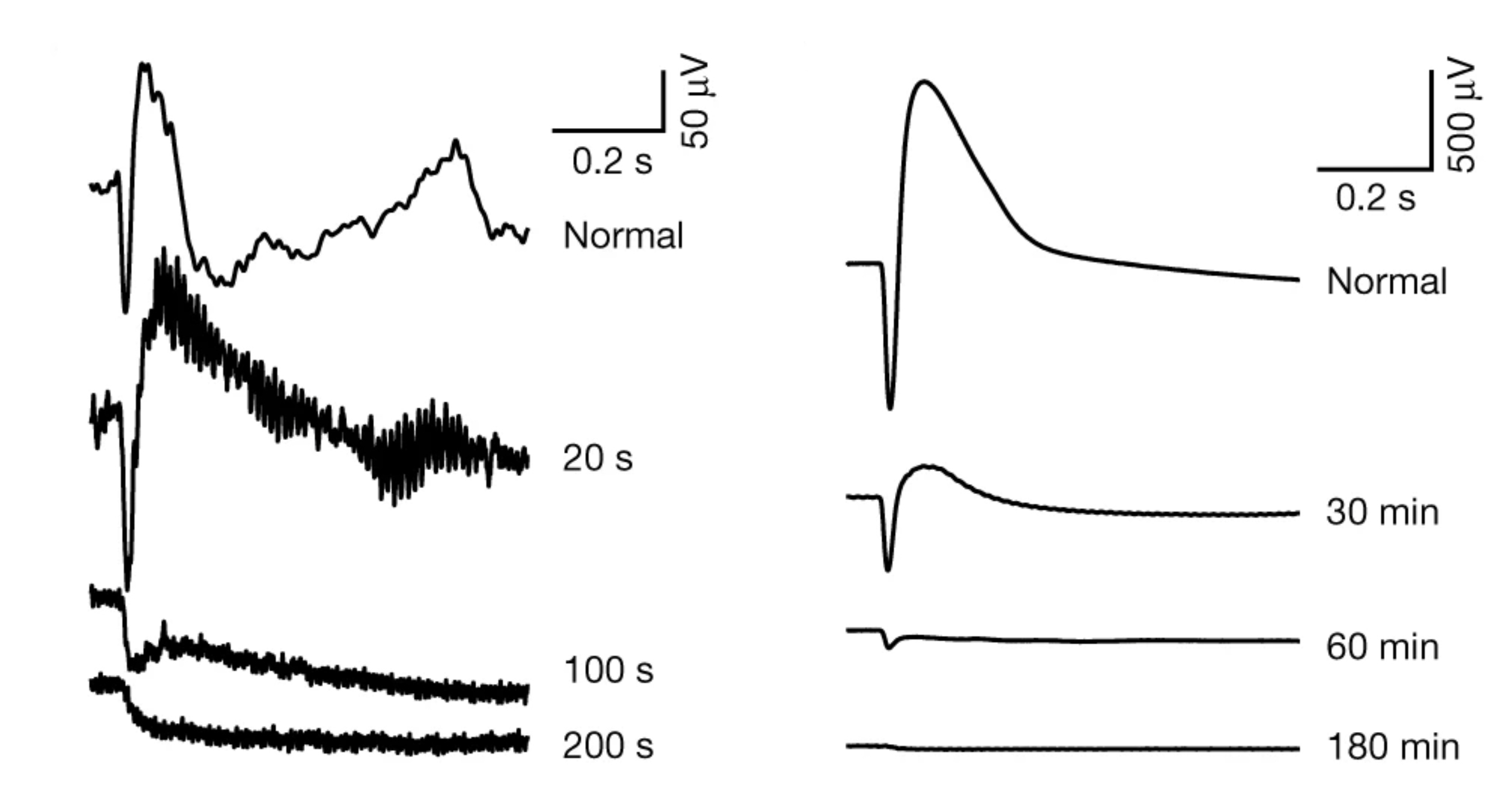
We have a new collaborative manuscript out in Nature, Revival of light signalling in the postmortem mouse and human retina. Full paper (here).

Authors: Fatima Abbas @neurofim, Silke Becker, Bryan W. Jones @BWJones, Ludovic S. Mure, Satchidananda Panda @SatchinPanda, Anne Hanneken & Frans Vinberg @fvinberg.

Abstract:
Death is defined as the irreversible cessation of circulatory, respiratory or brain activity. Many peripheral human organs can be transplanted from deceased donors using protocols to optimize viability. However, tissues from the central nervous system rapidly lose viability after circulation ceases, impeding their potential for transplantation. However, the time course and mechanisms causing neuronal death and the potential for revival remain poorly defined. Here, using the retina as a model of the central nervous system, we systemically examine the kinetics of death and neuronal revival. We demonstrate the swift decline of neuronal signalling and identify conditions for reviving synchronous in vivo-like trans-synaptic transmission in postmortem mouse and human retina. We measure light-evoked responses in human macular photoreceptors in eyes removed up to 5 h after death and identify modifiable factors that drive reversible and irreversible loss of light signalling after death. Finally, we quantify the rate-limiting deactivation reaction of phototransduction, a model G protein signalling cascade, in peripheral and macular human and macaque retina. Our approach will have broad applications and impact by enabling transformative studies in the human central nervous system, raising questions about the irreversibility of neuronal cell death, and providing new avenues for visual rehabilitation.

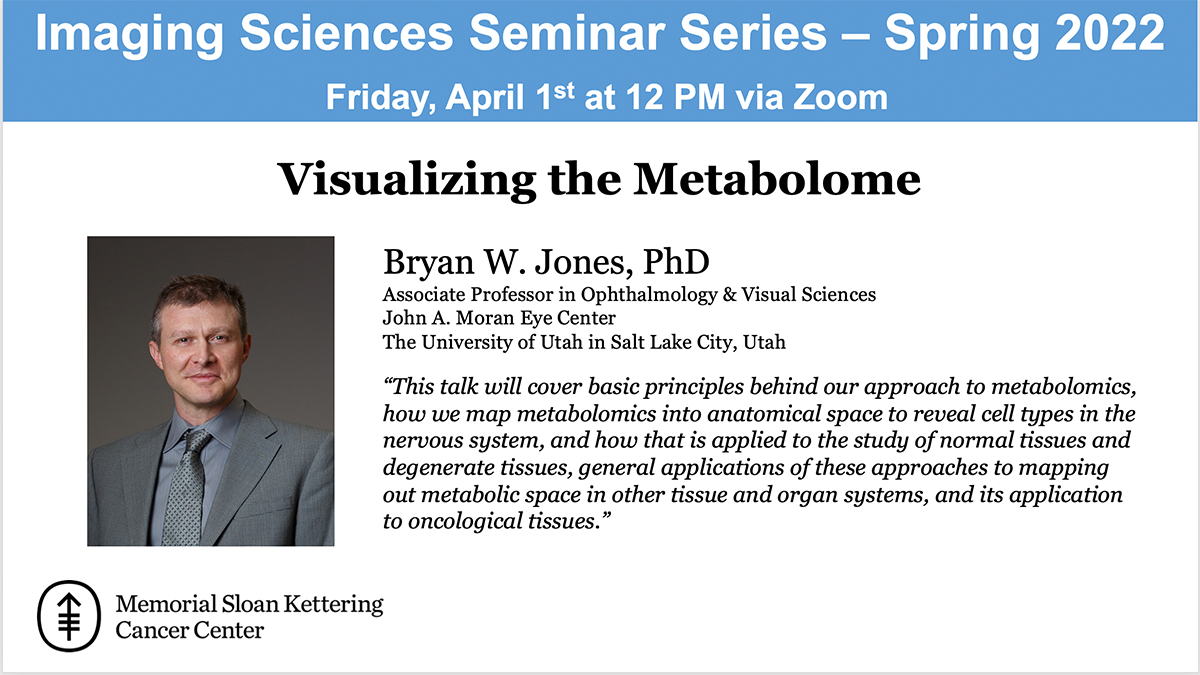
Seminar: Visualizing the Metabolome

PI, Bryan Jones delivered a talk today at Memorial Sloan Kettering Cancer Center on Visualizing the Metabolome.  This talk summarized some of our work a while ago on metabolomics and early data in oncology. It’ll be fun to see if we can get this work going again as there is so much room in oncology for metabolomic approaches.